
AI-Powered Search or AI Chatbots or Traditional Site Search?
- 7 min read
Highlights
- Traditional website search, AI-powered search and chatbots each play a unique role in improving user experience. None can replace the other, and a combination of all three is most effective.
- Traditional search supports direct user intent. AI-powered search provides more personalized results based on meaning and context. Chatbots guide users through complex processes.
- Unified systems optimize user experience, with each technology serving a different type of user behavior. This requires structured content, technology, and user experience to be connected.
- Key success measurements of an optimized system include faster information access, improved engagement rates, and increased lead generation.
- Implementing these technologies incrementally, starting from improving traditional search relevance, is an approach many successful organizations take.
Organizations today face a deceptively simple question with meaningful consequences: how should users find information on your website?
For years, the answer was straightforward. Build a solid site search, organize content well, and let users navigate. Now, the landscape has changed. Artificial intelligence, conversational interfaces, and evolving user expectations have introduced new possibilities and new confusion.
Many leaders are asking whether they should invest in AI-powered search, use chatbots, improve traditional search, or rethink the entire experience. The honest answer is that this is not an either-or decision. The most effective websites today use a thoughtful combination of all three approaches, each playing a specific role in helping users find what they need quickly and confidently.
This article breaks down how each approach works, where it fits, and how to think about building a system that serves both your users and your business goals.
The Enduring Value of Traditional Website Search
Traditional website search remains one of the most important tools on any digital platform. When users arrive with a clear intent, they often go straight to the search bar. They expect fast, relevant results that mirror the experience they get from major search engines.
A well-implemented search function does more than return keyword matches. It understands synonyms, accounts for common misspellings, and prioritizes results based on user behavior and business priorities. For example, a nonprofit may want donation pages or program information to appear more prominently, while an association may prioritize member resources or event content.
The challenge is that many organizations treat search as a basic feature rather than a strategic capability. Poor indexing, weak content structure, and lack of ongoing tuning can quickly turn search into a frustration point. Users who cannot find what they need will not spend time digging. They will leave.
Traditional search still matters because it supports direct intent. When someone knows what they are looking for, then search should be the fastest path to the answer. Ignoring or underinvesting in this area creates friction that no amount of advanced technology can fully overcome.
The Rise of AI-Powered Search and Discovery
Artificial intelligence has transformed how search can function. Instead of simply matching keywords, AI-driven systems can interpret meaning, context, and user intent. This shift allows websites to deliver more relevant and more personalized results.
AI-powered search can analyze patterns across content, understand relationships between topics, and surface answers rather than just links. For example, instead of returning a list of pages about membership benefits, an AI-enhanced system can summarize key points and guide users directly to the most relevant sections.
This approach aligns with how users increasingly expect to interact with information. They are accustomed to asking questions in natural language and receiving clear, concise answers. AI makes it possible to bring that experience directly into your website.
However, AI is not a plug-and-play solution. It depends heavily on the quality of your underlying content. If your content is unclear, inconsistent, or poorly structured, AI will struggle to produce accurate and useful responses. This is why organizations that invest in strong content architecture, clear messaging, and well-organized data see the greatest benefits from AI adoption.
AI-powered search is most effective when it enhances and extends traditional search rather than replacing it entirely. It adds intelligence and flexibility, but it still relies on a solid foundation.
Chatbots as a Guided Experience
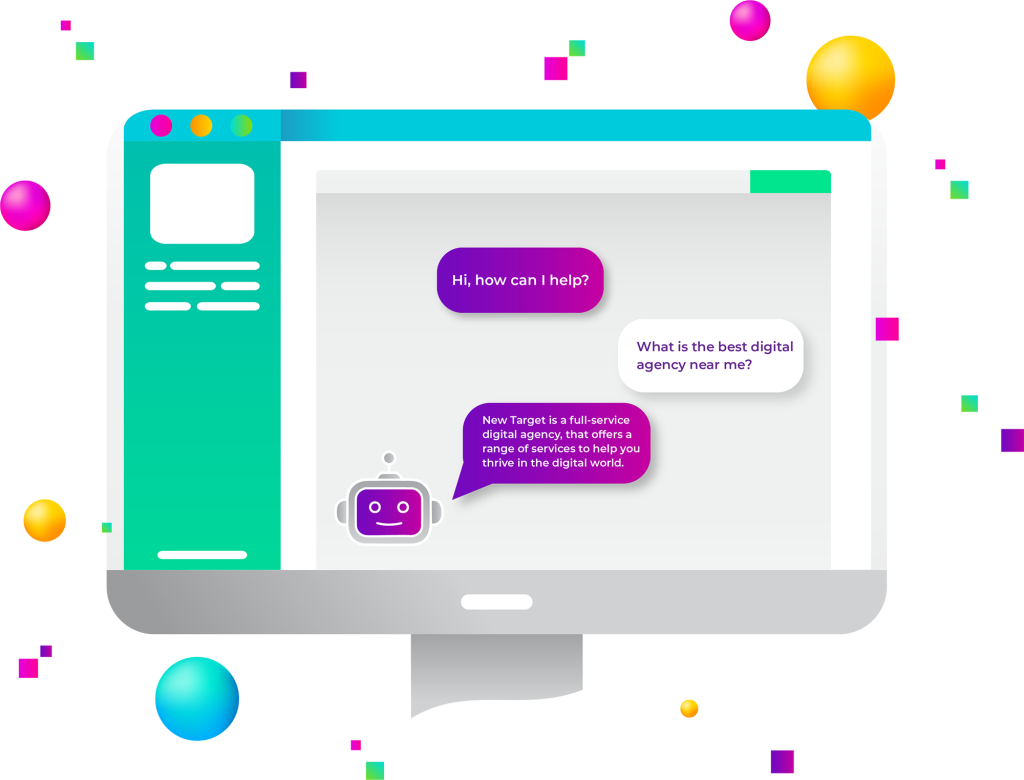
Chatbots represent another layer in the search and discovery experience. Unlike traditional search, which is user-driven, chatbots create a guided interaction. They can ask clarifying questions, provide step-by-step assistance, and help users navigate complex processes.
For example, a government agency might use a chatbot to guide citizens through permit applications. A healthcare organization could help patients find the right service or location. An association might assist members in locating specific resources or understanding benefits.
The strength of chatbots lies in their ability to reduce cognitive load. Instead of requiring users to search and interpret results on their own, chatbots can lead them through a conversation that narrows down options and delivers tailored answers.
With the integration of AI, chatbots have become far more capable. They can handle a wider range of questions, adapt to user input, and provide more natural interactions. This makes them particularly valuable for organizations with complex offerings or diverse audiences.
That said, chatbots are not a universal solution. They can frustrate users if they are poorly designed, overly scripted, or unable to handle real questions. They should be positioned as an option, not a barrier. Users should always have the ability to switch to search or navigation if they prefer.
The Best Approach Is a Unified System
The real opportunity lies in combining traditional search, AI-powered search capabilities, and chatbot interactions into a cohesive system. Each serves a different type of user behavior.
Some users know exactly what they want and prefer to search directly. Others are exploring and benefit from AI-driven suggestions. Still others need guidance and respond well to conversational interfaces.
A unified approach ensures that no matter how a user chooses to engage, the experience is consistent and effective. This requires more than simply adding features. It requires a strategic framework that connects content, technology, and user experience.
At the core of this framework is structured content. When your content is organized with clear relationships, consistent labeling, and defined priorities, it becomes easier for search engines, AI systems, and chatbots to deliver accurate and helpful results. Without this foundation, even the most advanced tools will fall short.
Equally important is governance. As content evolves, systems must be maintained and refined. Search algorithms need tuning. AI models need oversight. Chatbot flows need updates. Organizations that treat their website as a living product are far better positioned to succeed in this environment.
Practical Considerations for Decision Makers
For marketing leaders and organizational decision-makers, the most important step is to align these technologies with measurable business goals instead of chasing the latest trend. AI-powered search, chat interfaces, and traditional site search can all provide value, but only when they solve real problems for real users. The organizations seeing the strongest results are not the ones adding the most features. They are the ones building digital experiences that reduce friction, improve clarity, and help visitors complete meaningful actions more efficiently.
What is the purpose of your website?
A good starting point is to examine the core purpose of the website itself. What are the highest value tasks users need to complete? For an association, that may be event registration, membership renewal, certification lookup, or accessing resources. For a nonprofit, it may be making a donation, finding services, or understanding impact. For a B2B company, it may be requesting a demo, comparing solutions, or contacting sales. Every decision around search, AI, and chat should support these primary journeys.
Decision makers should also look closely at where users experience frustration today. Analytics platforms, heatmaps, session recordings, support tickets, and on-site search logs often reveal major gaps in the user experience. Visitors may repeatedly search for the same information, abandon forms midway through completion, or struggle to navigate large content libraries. These patterns often indicate opportunities where improved search relevance, conversational assistance, or AI-guided recommendations could create immediate value.
How is your structure organized?
Another critical consideration is the quality and structure of the organization’s content. AI systems perform best when content is well-organized, clearly labeled, and written with strong information architecture principles. Pages with vague headings, inconsistent terminology, duplicate information, or outdated content create confusion not only for users but also for AI-powered systems attempting to interpret and surface answers. In many cases, organizations discover that before adding advanced AI capabilities, they first need to improve governance, taxonomy, metadata, and content consistency across the site.
It is also important to think carefully about the role of conversational experiences. A chatbot should not exist simply because competitors have one. The real question is whether guided interaction would meaningfully improve the user journey. In some environments, a conversational interface can dramatically reduce friction by helping users navigate complex information, surface recommendations, or complete multi-step tasks. In other cases, a fast and accurate traditional search experience may solve the majority of user needs more efficiently. Often, the strongest strategy combines both approaches, allowing users to choose the experience that best fits their intent and comfort level.
Do you have the human resources for oversight?
Organizations should also consider operational readiness before deploying AI-driven systems. AI tools require oversight, governance, and ongoing refinement. Someone must review outputs, monitor accuracy, update knowledge sources, and ensure the experience remains aligned with organizational goals and brand standards. Without a clear ownership model, AI features can quickly become outdated, unreliable, or inconsistent. Long-term success depends not only on implementation, but also on maintenance and accountability.
Measurement is key to defining success
Measurement is another area where mature organizations separate themselves from trend-chasing competitors. Success should never be defined simply by launching a chatbot or enabling AI search. The presence of a feature is not the same as delivering value. Instead, organizations should evaluate outcomes tied directly to user behavior and business performance.
Key questions include:
-
Are users finding information faster?
-
Are visitors completing critical actions more successfully?
-
Are support requests decreasing?
-
Are engagement rates improving on high-value pages?
-
Are users staying on the site longer and exploring deeper content?
-
Are lead generation and conversion rates increasing?
-
Are staff spending less time answering repetitive questions?
These metrics provide a much clearer picture of whether investments in search, AI, and conversational experiences are producing meaningful returns.
It is equally important to recognize that implementation does not need to happen all at once. Many successful organizations begin with incremental improvements. They may first improve traditional search relevance, then introduce AI-assisted recommendations, and later expand into conversational experiences after stronger content governance is established. This phased approach reduces risk while creating opportunities for continuous learning and optimization.
The broader reality is that digital expectations are changing rapidly. Users increasingly expect websites to understand intent, provide faster answers, and guide them toward outcomes with less effort. Organizations that thoughtfully combine traditional search, AI-powered discovery, and conversational support will often create more satisfying and effective user experiences than those relying on a single approach alone.
Bringing It All Together
The question is not whether to choose website search, AI-powered search, or chatbots. The real question is how to bring them together into a unified digital experience that serves your audience and advances your goals. The strongest websites today are not built around isolated features. They are built as connected systems where content, search, AI, analytics, and user experience work together to guide users toward meaningful outcomes.
Organizations succeeding in this environment understand that adding a chatbot alone will not solve usability problems. AI-powered search only works well when supported by strong content structure and thoughtful information architecture. Future-ready organizations invest in content quality, accessibility, performance, governance, and user experience because these elements form the foundation that allows intelligent technologies to deliver real value.
Modern users also expect flexibility in how they interact with websites. Some prefer traditional navigation and search. Others want conversational guidance that helps them quickly refine decisions and surface answers. The best digital experiences support both approaches, adapting to different user preferences instead of forcing every visitor into the same path.
At New Target, we help organizations navigate this complexity with clarity and purpose. Through our web design services and web development services, we create modern digital platforms that combine usability, accessibility, performance, and scalability with AI-ready architecture.
If your organization is ready to move beyond basic functionality and create a more intelligent, future-ready website, New Target is ready to help you get there. Contact us.
A global team of digerati with offices in Washington, D.C. and Southern California, we provide digital marketing, web design, and creative for brands you know and nonprofits you love.
Follow us to receive the latest digital insights:
- 9 min read
For years, digital advertising has largely meant meeting people in one of two places: where they search or where they spend time. Google Ads captures people actively looking for something....

- 6 min read
Choosing a website platform often begins with a spreadsheet. The organization gathers requirements. Someone creates columns for security, accessibility, integrations, content management, scalability, performance and cost. WordPress, Drupal, Webflow, and...

- 7 min read
Public relations used to be relatively straightforward. Your organization developed its message, communicated with journalists and industry publications, issued press releases, cultivated relationships and tried to earn positive coverage. All of...

- 7 min read
For years, association website redesigns tended to begin with a familiar complaint: Our website looks dated. That is still a legitimate concern. Design matters. But in 2026, appearance is a...